


Secure Transport: Routes, Arrivals & Contingencies
Secure transport demands a strategic blend of intelligence, technology, and human expertise. Below are the key elements of an effective approach.
Route planning and intelligence
Successful transport security starts with thorough route analysis. Security teams must evaluate local risks — crime patterns, political tensions, infrastructure weaknesses — and develop three types of routes: a primary (balanced for efficiency and safety), alternate (to bypass threats), and emergency (leading to safe havens). Careful timing — avoiding peak hours or high‑risk periods — further reduces exposure.
Vehicle security and driver readiness
The vehicle must serve as a mobile fortress. In high‑risk areas, armoured vehicles with ballistic glass and run‑flat tyres are essential. Standard vehicles should be upgraded with GPS tracking, silent alarms, reinforced locks, and encrypted communication systems (radio plus cellular/satellite backup).
Drivers need training in defensive driving, threat recognition, and crisis response. Each vehicle must also carry an emergency kit (first aid supplies, fire extinguisher, tools).
Arrival and egress
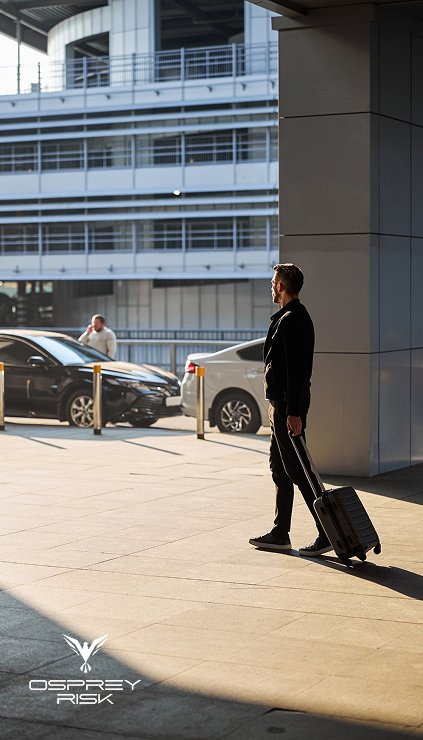
Arrival and departure are high‑vulnerability moments. A pre‑site assessment should examine CCTV coverage, choke points (narrow entrances, blind corners), and signs of suspicious activity.
Access should be controlled via gated entrances with biometric verification and coordinated security escorts. To minimise exposure, use pre‑arranged loading zones and covered drop‑offs (e.g., underground parking). Multiple egress routes must be planned in advance.

Contingency management
Responses must match threat levels. For low‑level threats (suspicious surveillance), increase vigilance and change route. For medium‑level incidents (aggressive tailing), activate alarms and divert to safe havens. For high‑level threats (active attacks), execute evasive manoeuvres, alert response teams, and seek cover.
Key response elements include:
- one‑touch panic buttons linked to 24/7 monitoring centres;
- pre‑vetted safe havens (embassies, secure hotels);
- on‑call medical and legal support.
After any incident, secure evidence (dashcam footage, GPS logs), update threat models, and support affected staff.
Technology and human factors
Modern tools enhance security: AI route optimisation predicts risks and suggests diversions; V2X communication alerts drivers to hazards; drone reconnaissance pre‑scans routes; biometric verification prevents unauthorised use.
Yet human factors remain vital. Drivers require vetting and regular training. Passengers need briefings on emergency procedures (exit locations, communication protocols, composure). Scenario drills (carjacking, medical emergencies) and stress management training reinforce preparedness.
Organisational best practices
Organisations should:
- tailor security to individual risk levels (public figures vs. low‑profile staff);
- audit third‑party vendors (chauffeurs, rental fleets);
- maintain centralised incident reporting;
- coordinate cross‑border security;
- review plans twice a year or after major incidents.
Conclusion
Secure transport in 2025 requires a layered strategy: intelligent planning, hardened vehicles, controlled transitions, rapid response, trained personnel, and adaptive technology. By addressing risks at every stage, organisations can ensure safe movement even in high‑threat environments.
Contact Osprey Risk to design your secure transport framework.